


Patriotic and Proud: Stories of Belonging in Real Life – America
Key Takeaways
National belonging is felt in situations where Americans are able to feel patriotic, united, and part of a whole.
Experiencing national belonging occurs when Americans feel proud of their country and like everyone is able to overcome their differences to work together for the common good.
A lack of national belonging was most often experienced in situations where respondents felt rejected, discriminated against, or left behind.
Experiencing a lack of national belonging was associated with feeling disconnected, disappointed, and abandoned by the country as a whole.

Everywhere feels like Home:
National Belonging is Experienced as Pride and Unity
The United States is home to 331 million people, and counting, and covers an area of 3.8 million square miles. With such a vast population and geographic span, experiencing belonging as it relates to living in America likely manifests in different ways for every individual in every state. When respondents were asked to describe situations in which they had experienced belonging in America, and what it felt like, a majority of the situations included times when respondents had positive experiences and interactions with both familiar, and unfamiliar, members of their communities. Demonstrations of patriotism were also associated with national belonging. Many respondents described times when they were able to exercise their civil rights through attending protests, or rallies, and how much they experienced a sense of belonging while being in crowds with others who shared their views on political issues or who endorsed the same candidates. Smaller gestures of patriotism, like placing a hand over your heart and listening to the national anthem were also associated with national belonging. National belonging was also associated with holidays, like the Fourth of July, and Memorial Day, and with times when Americans are all rooting for the same outcome, such as the Olympics.
National belonging was most frequently described as a feeling of being proud to be an American. Many respondents described the importance of symbols and gestures as prompting these feelings of pride. For example, one respondent shared, “I truly felt I belonged in the US when our cruise ship sailed past the Statue of Liberty. It made me think of how my mother must’ve felt when she first arrived in America while escaping religious persecution. The experience made me feel proud to be an American living in a country that welcomed my family to its shores (Woman, 64).”
Elections, polling places, and having the right to vote were also related to national belonging. One respondent reflected, “National elections make me feel a sense of belonging. Americans coming together with shared beliefs and values and attempting to express them, no matter the nature of them, demonstrates the greatness of this country and reminds me of the fact that America is worth fighting for, no matter where you land on the political or ideological spectrum” (Man, 33). Another said, “I feel good when I vote. I feel I have a voice in local, state, and national government. I hope the person I voted for wins, but if he/she doesn't win, I hope the person who does will do the right thing” (Man, 64). The community members who volunteer as poll workers are also important to creating a sense of national belonging. As this respondent shared, “When I vote in elections I feel like I truly belong. The poll workers seem happy to see me and greet me. The sticker saying, ‘I Voted’ gives me pride. I am part of something bigger than just me” (Woman, 70).
Experiences serving in the military or honoring veterans through parades or everyday kindnesses were also associated with national belonging. For example, one veteran shared, “When I was in the US military service, stationed in Germany, I felt very proud meeting different Americans from other states and backgrounds” (Man, 86). Seeing support for veterans, especially across lines of difference, also evoked feelings of national belonging and pride. As one respondent shared,
I was in a store recently and an older gentleman wearing a Vietnam Vet hat was having trouble with his electric wheelchair. Several people —of various ages and ethnicities— were helping him maneuver it and with his purchases. No questions or confrontations about politics, race, or vaccination status. It made me happy and reminded me not to listen to mainstream media. (Woman, 56)
As devastating as the September 11, 2001 attacks were, several respondents also described remembering how proud they were to see people supporting each other. One respondent said, “On 9/11, I felt like, for once, everyone was on the same side and everybody was looking out for each other. I saw people of all colors and ages comforting each other as we all tried to make it home safely. That day it didn't matter if you were Black, White, Asian. It mattered that we all had a shared trauma and all needed recovering from that” (Woman, 32). While 9/11 was a moment of national belonging for many respondents, we must note that the rapid increase in Islamophobia and the scapegoating of Muslim, Arab, Sikh, and other communities, also resulted in 9/11 being a profound moment of exclusion and othering for many Americans.
Beyond pride, national belonging was associated with feeling connected to others across the nation, and especially across differences. Many respondents talked about feeling national belonging when they were able to express their opinions about religion, politics, and world events freely to people who often did not agree with them. Being able to disagree and grapple with difficult topics while still feeling respected and heard was an important part of feeling national belonging. As one respondent shared, “I was having a religious discussion in a group of men. While many disagreed with me, they supported me as part of the group and I felt encouraged despite our disagreements” (Man, 74).
Another respondent shared, “I have traveled and lived in different parts of the country and always felt comfortable with any and all of the people I met on the streets of America. People being kind and helpful to one another regardless of race or culture is what America is known for and it makes my heart happy” (Woman, 60).
In a bittersweet reflection, one respondent shared, “I always feel like I am American, I was born here. I am proud of our country always, even if it disappoints me at times. It seems we take one step forward and two steps back most of the time” (Man, 34). The complexity of feeling both pride and disappointment was not a rare one. In the next section we review what it feels like when we lack belonging in the nation we call home.

No Place to Call Home:
Lacking National Belonging is Experienced as being
Rejected from your Homeland
When respondents shared times when they felt a lack of national belonging or even exclusion, it was most frequently related to negative interactions with members of their community and with American policies or systems. Respondents described being bullied or discriminated against in public spaces, particularly around their race or political affiliation. There was also a sense of being generally anxious and on high alert because they never knew when someone was going to treat them badly. When policies or bureaucracy interfered with a respondent’s ability to get the help and services that they needed, there was also a shared sentiment that the country as a whole no longer cared about them.
Lacking national belonging was most frequently experienced as a feeling of disconnect between respondents and American ideals and norms. For example, America is widely viewed as a place of religious tolerance, and yet respondents from across faith traditions described scenarios in which they experienced bullying, prejudice, discrimination, or violence for their beliefs. One respondent shared, “There were a lot of times growing up when I didn't feel like I belonged at school because kids would tease me or not understand certain things that I ‘could or could not do’ because of my religion”(Woman, 31). Another said, “I feel marginalized every time there is an incident of antisemitism, especially the recent arson at a synagogue near my town. Hatred always makes me sad and fearful that the USA is turning into Nazi Germany” (Woman, 62). As mentioned above, while 9/11 inspired national belonging for many, it also was a time of severe othering and discrimination for others. As this respondent described, “After 9/11, it felt like Islamophobia was part of our national identity. I did not belong. I felt outcast, unincluded, afraid, confused” (Man, 40).
Experiencing racial prejudice or discrimination was also frequently mentioned as evoking a lack of national belonging. Respondents from across racial backgrounds described how alienated and demeaned they felt when they were differently or poorly treated due to their race. For example, one respondent described a frequent occurrence, “When people ask where I am from when they see my name or start guessing countries I might be from it makes me feel disrespected and like an outsider in my own home” (Woman, 25). Another reflected, “Because of my Mexican heritage I often am made to feel like I do not belong. I have been looked at as less than while shopping, dining out, in the general public. Prejudice is still alive in our country” (Woman, 25). This respondent shared a sense of missed opportunity due to their difficulty navigating racially diverse situations. They said, “Just about everyone in my hometown was white, Catholic, and middle-class. When I started living in a college town an hour away, I realized I was missing a ‘normal’ American upbringing. I feel weird and different. I still do not know how to properly interact with people who aren't like me. I wish I had been exposed more to people of different backgrounds growing up” (Woman, 30).
Current national events and attitudes or fears surrounding them, often affected how respondents experienced national belonging or its lack. For example, this respondent recalled how he was treated on campus after serving in the military, “After returning from Vietnam I was taunted at and treated rudely while in uniform, even spit at. I felt sad, angry, and less than valued. I should have been treated with the same respect as any other student” (Man, 79). Another recalled how they were treated during the pandemic, “I noticed that a white family was staring at me and keeping their distance. I heard them mumble racial slurs about me and tell their kids how they should stay away from me in case I "infect" them. I felt less than human” (Woman, 21). The attack on the Capitol on January 6th also evoked a sense of lacking national belonging and general disappointment with America as whole. As this respondent shared, “I was horrified during the January 6th insurgence, and I did not feel like those people represented American values or my values whatsoever. It made me angry, sad, and ashamed to be an American” (Woman, 66).
Respondents who experienced a lack of national belonging often described feeling abandoned or left behind by America’s political landscape and social policies. Whether it was difficulty meeting basic needs currently, or concerns about the future, respondents often described feeling like the government did not care about them or their needs. For example, this respondent shared, “As an elderly white male, I have been disregarded and left behind. After working hard my entire life to be able to retire, I now find my savings quickly being depleted. Social security is supposed to go up 6% next year, but Medicare is to go up 14%. How can I possibly live under these conditions when the government is bent on destroying everything I've worked for” (Man, 76). Another said, “I am poor and living far below poverty level and applying for help and being blindly denied and treated poorly by those who have it far better than me. The system assumes that everyone is lying. Those who need the most get the least (Man, 66). National politics and polarization between political parties, unsurprisingly, contributed to a sense of not belonging in America. As one respondent reflected, “The hateful rhetoric and partisanship has increased dramatically, and ignorance and social defiance have become mainstream. I feel disappointed in my country and its people” (Man, 35).
We were struck by how similarly Americans experienced national belonging, and not belonging, regardless of their own backgrounds and beliefs. We experience national belonging when we feel proud to be American, when our policies represent our interests and when we feel we are treated with dignity and respect for our shared humanity. According to these respondents, rising polarization and the pervasive “us versus them” rhetoric is not reflective of real America. Americans listen to each other and respectfully disagree. They resolve their differences through peaceful protest and voting and we hope you will too. This concludes our Stories of Belonging in Real Life Series. Want to stay connected? Contact us here or for questions please email us at belonging@projectoverzero.org.
Thank you for reading. Check out the other stories in this series...
A Warm Welcome: Stories of Belonging in Real Life Local Communities
Key Takeaways
Experiencing local community belonging happens when neighbors take care of one another and support each other, whether that be in everyday tasks or in major life events.
Local community belonging was often associated with feeling warmth, consideration, and generosity from neighbors.
A lack of local community belonging was most often experienced when neighbors and other community members had negative interactions with each other, often related to differences in identity and family structure.
Experiencing a lack of local community belonging was associated with feeling unwelcome, unwanted, and like an outsider in your own community.
Looking out for Each Other:
Local Community Belonging is Experienced as Neighborly Love
When asked to recall situations in which they had experienced belonging in their local communities, respondents often described having positive interactions with the people they encountered every day. These ranged from casual interactions with their neighbors, to feeling welcomed at local businesses, and enjoying community events and activities like festivals and block parties. Local belonging was the feeling of being a part of a community that supports and cares for you.
Overall, experiencing belonging in one’s local community felt like being connected and comfortable with the people around you. Respondents were moved by small friendly gestures like being waved at, or wished a good morning, and by being approached with warmth by people they didn’t know. Though these exchanges were often brief, they made lasting impressions. For example, this respondent shared an encounter:
I was at the post office standing in line and a woman started asking me questions as if I worked there. I told her that I didn't know the answer and an older gentleman standing behind me pointed at her and said, ‘she must be crazy.’ The next moment, he was standing next to her and she called him "honey." They were married! He looked at me and winked, and I started laughing so hard (which isn't like me). He was being playful, and I felt like I was part of an inside joke. (Woman, 51)
Another respondent recalled applying for a job. They said, “I went into my local bar and grill to apply for a cook position. Some locals and I said hi to each other and the owner came out and sat with me. I had never met the owner, but I was instantly hired and it felt good when a few of the regulars cheered” (Man, 43). Many respondents spoke to how meaningful even short conversations with neighbors are, such as “Every time my neighbor walks by with their dog, the dog runs up to me for a pet and the neighbor stops to chat. It is a really good feeling to know my neighbors are interested in me and my daughter. I feel fortunate to belong to this community” (Woman, 60).
Respondents frequently talked about feeling belonging when their community has worked together or supported each other. They described times when their neighbors shared vegetables from their gardens, worked together to clear snow, or helped each other to find lost pets and packages. These stories included acts of kindness, such as someone helping to jumpstart your car or doing community service together to beautify local parks, but also grander gestures like collecting money to install an accessible ramp for an elderly neighbor, organizing a graduation parade during the COVID lockdowns, and bringing meals to grieving families. One respondent shared this story of their community’s unexpected care, “My wife had dementia and wandered away from the house. My neighbors used their outdoor cameras, got in their cars, and searched the community for hours until she was located. Before that happened, the only interaction we would have was saying hello and waving to each other” (Man, 77). Another said, “We forgot to tell our neighbors that we were going on a two-week vacation. When they didn’t see us or any activity at our house, they had the police do a wellness check. It made us feel loved because someone was watching out for us” (Woman, 69).
Feeling like one’s neighbors looked out for each was an important aspect of local community belonging. As this respondent described, they felt belonging when, “A neighbor stood up for me to a racist person. They advocated for me. They used their privilege to help me. I was relieved and grateful because too many people don’t speak up” (Woman, 45). Unfortunately, not all neighbors are supportive. In the next section, we review what it feels like when your neighbors are openly hostile.

Hostility at Home:
Lacking Local Community Belonging is Experienced as being on the Outside
Lacking belonging in one’s local community was often experienced as feeling disconnected or like an outsider. Respondents described feeling like they were not welcome, unwanted, and often disrespected when encountering other people where they lived. Respondents described times that they experienced negative interactions with neighbors, school officials, business owners, and law enforcement. Those that moved to and lived in these communities struggled with feeling ignored, rejected, and often, unsafe.
Respondents that experienced a lack of local belonging often described living in communities that were more insular and reluctant to trust newcomers. These respondents described greeting their neighbors and being ignored, feeling lonely in their neighborhoods, and hurt by the receptions they received when they moved in. Some of these attitudes toward “outsiders” were made explicit, as this respondent said, “There is a general feeling of not belonging because I am not a native of my town. There is a saying ‘just because you were born here doesn't make you a native’” (Woman, 78). Others shared the impact on themselves and their children. For example, this respondent shared, “I moved to a very small, rural town where everyone knows everyone and they don't like ‘outsiders.’ Enrolling my kids in school was emotional because it was obvious I wasn't wanted in the town” (Woman, 39). Another said, “While taking my daughter on a walk, I saw some of my neighbors having a play date for their children. I had previously spoken to one of these neighbors about setting up a playdate with my daughter, but it hadn't happened. I felt left out, especially on my daughter's behalf” (Woman, 35).
Differences in identity and demographics often contributed to feelings of being excluded, or even discriminated against. When respondents were members of racial or religious minorities they described being stared at, profiled, and left out. For example, this respondent shared, “I'm not a member of the dominant religion here, so I feel almost shunned. It is a quiet, ongoing lack of social connection” (Woman, 59). Another respondent spoke about experiencing discrimination in a local bar, “I went into a bar wearing a kippah after having left an event at my synagogue. Someone started making antisemitic comments to me. I asked him to leave me alone and he got angrier that I wouldn't engage with him. Eventually, the bartender intervened and told him off, but it made me feel physically unsafe. It made me question the safety of Jews in my neighborhood” (Man, 30). Another respondent spoke about an encounter with law enforcement, “I was walking down the street with my two friends from school. The police pulled us over and asked us what we were doing in the neighborhood. They searched us and I felt like less than a person” (Woman, 21).
One’s family structure also affected community dynamics and how much belonging respondents experienced in their communities. Some events felt exclusionary if someone did not have a partner or children. For example, “There was a social gathering to which only couples were invited. I felt ostracized because I was not included. If it was a neighborhood social gathering everyone should have been invited” (Woman, 75). One respondent shared her struggles with infertility and the harm experienced in her community, “We are left out of events all the time in our neighborhood because we don’t have children. It’s happened with friends and neighbors too often to list. There’s lots of thoughtlessness when people ask why we don’t have kids with no regard for how sensitive the topic is. I feel left out, ashamed, and lonely” (Woman, 50). Another parent spoke to how disappointed they were with the beliefs held by members of their community:
While working on a mural at my child's elementary school, a parent and I were discussing local homelessness, and the need to truly help people, house them, etc. A third parent, not understanding what we were talking about, jumped in and began complaining about the homeless, saying they were disgusting, lazy, dangerous, and should be locked up. That parent then also began talking about how less money was going to ‘gifted’ programs her kids belonged to because they were giving more money to ‘special needs kids.’ Both of my kids have ADHD, and one is on the Autism spectrum, and receives special services. I was angry, hurt, and ashamed to be part of a community that might be identified with ideas like this. (Woman, 44)
Throughout these stories of lacking local community belonging, there was a consistent feeling that people around you just did not care about you or want you around. In communities where respondents felt a lack of belonging, they felt like their neighbors showed no concern for their well-being, inclusion, or even humanity, and put simply, it hurts.
Every time we leave our front doors and encounter a neighbor we have the opportunity to make someone’s day a little bit brighter and to make our community feel a little more special. We each have a role to play in creating communities where everyone can experience belonging. We invite you to consider how you can be more inclusive and kind in your community. Think about whether you could greet someone new or invite them to the weekend cookout. Even small gestures can go a long way to helping someone feel welcome and like they belong.
Thank you for reading. Check out the other stories in this series...

Joining Forces: Stories of Belonging in Real Life Workplaces
Key Takeaways
Experiencing workplace belonging happens when coworkers were spending time together, whether that was collaborating effectively on a project or getting to know each other on a personal level.
Workplace belonging was often associated with feeling like you have what you need to be successful in your role and that your efforts are meaningful and recognized.
A lack of workplace belonging was most often experienced when conflicts arose at work, typically related to mistreatment, exclusion, and differences of identity, values, or opinions.
Experiencing a lack of workplace belonging was associated with feeling disengaged, unwanted, and frustrated with a workplace, whether due to how it is run or how the people who work there behave.

Working Together:
Workplace Belonging is Experienced as Collaboration and Achievement
The average American will spend close to fifty years in the workforce. Our workplace experiences and colleagues have a significant impact on our well-being and our lives, yet when asked to describe situations in which they had experienced workplace belonging, many respondents had never really thought about it before. Those who had experienced workplace belonging most often described situations where they were working effectively with their coworkers. These were occasions where the entire team pitched in to accomplish a seemingly insurmountable goal, or times when they supported each other with difficult clients or problems. Workplace belonging was also experienced when respondents were able to spend meaningful time together, including time spent celebrating holidays, recognizing staff accomplishments, sharing meals, and having casual conversations about their lives outside of work. Receiving positive feedback and generally being treated well by their colleagues were also associated with experiencing workplace belonging.
Workplace belonging was most frequently experienced as a feeling of being wanted or valued at work. There were many respondents who described how meaningful it was when others took notice of their contributions and how it motivated them to work harder. For example, one respondent described, “My coworkers and I run like a well-oiled machine and we all enjoy our work together. Workdays are never a drag because we have all become friends by going through the trenches. I feel like I am doing what I am supposed to be doing. I have the respect of my colleagues, and I get along well with the people around me” (Man, 27). Another respondent who typically works alone shared this experience with a client:
I tune pianos. Recently, someone made the comment to me that I need to take better care of myself because they can't have me die on them. I am the only piano tuner in a town of about 90k. This alone made me feel like I mattered, belonged, was on people's minds in a positive way. I look forward to being people's "hero" because I make their piano sound new again. It's nice to feel needed. (Man, 61)
Volunteers can also experience workplace belonging when their contributions are explicitly noted and appreciated. This respondent shared their experience, “I have volunteered for an organization for 20 years where I clean the building every other week. All of the full time employees have their names printed in colored ink by their doors. I went in one day and someone had written my name with ‘First Impression Specialist’ underneath it. I felt very valued and liked” (Woman, 56)
Feeling cared for outside of the office was also a part of feeling wanted and valued. This respondent shared, “When I had surgery last year, so many people reached out to me and provided love and support. One individual even brought a care package to my house. It made me feel loved and cared for because people took time out of their day to message and check up on me” (Woman, 29).
Workplace belonging was also associated with feeling like others were rooting for you, both as an active employee, but also when transitioning out of roles. One respondent reflected on their first day on the job, “On my very first day at my current employer, everyone was so welcoming and supportive, and it was genuine. It made me feel comforted and happy because I truly felt like everyone there was on my side and wanted me to succeed” (Man, 29). Another reflected on a coworker’s last day, “We celebrated a coworker’s retirement. We all felt belonging and accomplished as we worked side by side together. It felt great knowing that this person worked hard, accomplished a lot and was now looking forward to relaxing times” (Man, 38).
Working adults typically spend at least one-third of their days commuting to or at their places of work and it is heartening to observe that these places can provide a sense of belonging through collaboration, achievement, and recognition. However, many respondents also had experiences of feeling like they did not belong at work.

Stuck Together:
Lacking Workplace Belonging is Experienced as being Disengaged, Disposable, and Frustrated
Many respondents were ambivalent about finding belonging at work. They simply wanted to do their jobs and go home. But, for those who had experienced a lack of belonging, the situations often involved tensions regarding their values and identities. Situations in which respondents felt like the only person of a particular race, gender, or who held particular views were frequently mentioned. Respondents also tended to share times when they had been mistreated at work, including times when they had been bullied or received poor treatment in terms of their pay, schedule, or how feedback was shared with them. Lastly, respondents often experienced a lack of workplace belonging when they had experienced exclusion at work. These instances of exclusion ranged from times when they had been excluded from outings like lunches or after-work activities, all the way to being excluded from important conversations and decision making. It is also noteworthy that some of the experiences that respondents described went beyond a mere lack of belonging to situations alleging illegal discrimination. While we recognize the harm and hardship that those respondents experienced, we have omitted those stories from this work due to their extreme and sensitive nature.
Respondents who experienced a lack of workplace belonging often described it as feeling disconnected or disengaged. For example, one respondent described, “At my new job, employees already had groups of friends that they stuck to and made it difficult to join, while managers acted too good to even talk to me, every single day. I felt like an outcast undeserving of their time and attention” (Man, 29). Another respondent shared that they lacked workplace belonging when, “Decisions were made regarding team structure and responsibilities and I was not informed or consulted regarding the change. I felt abandoned and like my insight was not valued” (Woman, 38).
As referenced earlier, these feelings of disconnect were sometimes associated with how respondents’ identities and circumstances were acknowledged or valued in the workplace. For example, one respondent shared, “We had a company dinner for all employees, temps, and regular staff. All the food was gone by the time I got there. I felt left out. I work in the back and have a disability that causes me to be slow. They should have made sure that everyone got a plate” (Woman, 57).
Another respondent shared their feelings on not being supported by leadership, “I work as a nurse in a veterinary clinic. We are very high volume and often nurses are looked down upon and receive rude remarks from clients. When reported to ownership, there is no accountability. This makes nurses feel unappreciated as we work extremely hard daily” (Woman, 30).
Identity and other individual characteristics continued to play a role in how respondents experienced a lack of belonging and feeling unwanted. This respondent described their experience of being looked over for promotion, “I have applied for promotion a few times and was unsuccessful. My company has a history of age discrimination and tends to promote strong extroverts, and I am introverted. I did not feel like the totality of my knowledge and experience was considered, and the failure to provide post interview feedback, which is standard process, almost prompted me to leave the company” (Man, 53).
Respondents who experienced a lack of workplace belonging often reported feeling angry at their treatment and the sense that they are being devalued. As this respondent shared, “Managers create more work unnecessarily for employees because of their lack of communication and the inefficiency of said decisions. I feel frustrated and stuck because benefits are tied to employment which makes it difficult to look elsewhere for employment” (Man, 40). Another expressed, “I work for the township and there are directors and higher-ups who talk down to you. Most think that because you have a receptionist job it's because you are ‘less than’” (Woman, 52).
Difficult power dynamics can also affect workplace belonging. For example, “In my last job, my direct supervisor was an information hoarder who would regularly withhold information as a means of establishing power. She would isolate people by withholding the information they needed to successfully do their jobs and then punish them for it. When I was the target of such withholding, I felt very isolated and like I was being set up. I was made to feel stupid for asking clarifying questions” (Woman, 33).
Workplaces across America are where some of our most diverse and varied interactions occur. These spaces have the opportunity to generate a sense of purpose, accomplishment, and connection among their employees, but only if their cultures and processes are shaped with intention, inclusion, and care. We invite you to reflect on how you can contribute to a culture of belonging in your workplace.
Thank you for reading. Check out the other stories in this series...
Chosen Connections: Stories of Belonging in Real Life Friendships
Key Takeaways
Experiencing friendship belonging, and not belonging, is very similar to that of family belonging. Friends are the family we choose.
Friends are often there for us when our family cannot be, providing deep emotional and tangible support.
Friends are inclusive and think of each other even in each other’s absence.
When belonging is lacking in friendships, the relationships may be re-evaluated as never having been true friendships at all.
Bonded:
Friendship Belonging is Experienced as Inclusion and Care
Non-familial relationships often provide us with the support and care that we may not be able to access in our families of origin. One notable observation was that when respondents were asked to describe a time that they felt a lack of friendship belonging, they tended to re-evaluate their relationships. In friendship settings, because these relationships are chosen and optional, when someone experiences a lack of friendship belonging they often conclude that those that excluded them were never really their friends after all. True friends would never make you feel like you did not belong.
Most of the situations in which respondents experienced friendship belonging included being able to spend quality time together. These situations were far-ranging, from parties and concerts, to work and/or school projects, to trips and hiking, to just having meaningful conversations at home. Where or how the time was spent was not nearly as important as being together. Respondents also frequently described experiencing belonging when they were able to help or be helped by their friends. Help was also described broadly, ranging from emotional support in times of crisis, to tangible or monetary support during hardships, and help with everyday life. Friends are those you can count on in your time of need, and who can also count on you.
Friendship belonging, similar to family belonging, was most frequently described as a feeling of being wanted or loved. Friends are often present when family cannot or will not be. One respondent shared a small but kind gesture from a friend stating, “I was with my friend and he bought me coffee because I didn't have my wallet. He said, ‘you're my best friend, I got you.’ I felt wanted and loved. I don't have a lot of family that I am close to. My friends are my family” (Man, 28).
Holidays were another time in which friends might step in to support one another. One respondent shared, “I was given a home cooked dinner on Thanksgiving Day. My friend brought it over as a surprise to me. I felt humbled and accepted and loved” (Man, 60). Another described a similar holiday experience sharing, “I was invited to Christmas dinner with my friends in Phoenix when I was away from my family. It made me feel loved because they cared about my Christmas experience” (Man, 54).
Respondents did not only offer times of merriment, they also shared when they had been called upon during times of hardship. For example, one respondent shared, “My neighbor had a stroke and called me to come help her at her house. She did not call her family or medical personnel– I made those calls. Now she tells everybody that I saved her life. I am humbled that she thought so much of me that she would trust me with caring for her” (Woman, 74). Humility was a recurring theme, respondents often described feeling honored to be held in such high regard and trusted so deeply.
Intentionally being included was also a big part of feeling wanted and loved. One respondent reflected:
I had gone for a soda and my friends were taking a group photo. Someone noticed that I wasn't there, and they went looking for me so that I could be included. It made me feel that they were looking out for me and wanted me there. It made me feel happy and to this day, more than 65 years later and many miles apart, many of us are still friends. (Woman, 82)
Feeling connected and part of a greater whole was also a prominent experience in friendship belonging. One respondent described how finding spaces of connection in adulthood harkened back to the ways they were able to connect as a child, “When I first started doing community theater and had my first opening night– it felt really good to be a part of such a large, shared experience, to feel close to people who had all been through the same thing. The only other place I'd gotten that was in youth sports years earlier” (Man, 42). Feeling like part of a team, even informally, was often referenced with regard to friendship belonging. As one respondent said, “After school, a whole group of us used to play football in the street. It was so fun working together and competing against one another. I felt part of a team; a group of people I could count on and people knew they could count on me” (Woman, 38).
Ultimately, experiencing friendship belonging just feels good. It’s nice to be thought of even when you’re apart. As this respondent described, “I went to my friend's house to do homework with two other friends and I felt as if I truly belonged because we kept laughing till our stomachs hurt and it was just a good feeling. I felt as if I finally found friends who care about me and not about what my background is. When I was younger, I attended predominantly white schools where I used to have fake friends who would leave me out of many group hangouts and pretend that they didn’t know me in public” (Woman, 18). This experience, while speaking to having found friendship belonging also speaks to some of the recurring themes that emerged when we asked respondents about their experiences of lacking belonging in their friendships: fake friends and challenges around identity.
Left Alone:
Lacking Friendship Belonging is Experienced as Being Disconnected and Excluded
Experiencing belonging was essential to friendships. If you don’t feel that you belong with your friends, many respondents suggested that those people simply are not your friends. For those who felt that they had experienced a lack of belonging with their friends, it often had to do with demographic and identity changes. Everyone progresses through life stages at different rates and in different orders. If you feel like, for example, your friends are getting married or having children and you are not, you can lose that sense of belonging and start to feel left behind. Similarly, situations in which respondents felt a lack of friendship belonging often involved feeling excluded by those they viewed as friends. Whether this exclusion was from conversations or activities, feeling like your friends are hanging out without you was consistently associated with a lack of belonging. Beliefs and attitudes can also change over time and a lack of friendship belonging was sometimes attributed to learning that your friends’ thinking about issues of politics or values have diverged from your own in a way that feels irreconcilable.
Lacking friendship belonging was most frequently experienced as a feeling of being disconnected from your friends. At times this was due to not being invited to events. As one respondent shared, “I've been left out from being invited to play games online with my friends/co-workers. I felt like I wasn't a part of the group. I felt like they just assumed because I have a wife and kids that I can never do anything fun. It would have made me feel better if they would have at least invited me even if I couldn't join in” (Man, 35). Another shared, “I was not invited to a friend’s wedding but found out that many other mutual friends were invited. I felt sad and angry because I thought we were closer” (Woman, 59).
At other times, this disconnect can be experienced even when friends are all together, as this respondent experienced, “I have felt like I don't belong when my friends talk about traveling abroad, which I have never been able to do because it is too expensive for me. My friends were talking about travels to Europe and I felt like I did not belong financially and that I am being left behind because of my life choices” (Woman, 42).
The feeling of disconnect sometimes stemmed from personal changes instead of explicitly being let out. For example, this respondent talked about navigating life after his wife’s passing, “I was at a bar with two friends who are both married. After a few beers, both my friends’ wives walked in. I started feeling bad because my wife passed away nine years ago and I missed her badly. I felt out of place in that group because they were all having a good time with each other and I was alone” (Man, 69).
When experiencing a lack of friendship belonging, respondents often described feelings of sadness and hurt. For example, one respondent described their friends’ response to their declining health, “When I was diagnosed with Huntington’s Disease, many of my friends just stopped coming over and stopped calling because they thought that I wasn’t worth being around anymore. It hurt me and made me feel like a freak especially when I had trouble walking and talking” (Woman, 58).
Another respondent described how their friends reacted to their sobriety, “I worked at a bar/restaurant for nearly 8 years. I quit drinking and demoted myself from server/cocktail waitress to hostess. Prior to quitting drinking, I fit in quite well, but after I quit, I stopped being invited out, and they all slowly drifted away. I have mixed feelings. It makes me sad because I lost some good “friends,” but I question if they were even true friends to begin with” (Woman, 31).
Ultimately, lacking belonging with friends was described as feeling like they had left you behind or no longer cared enough to take an interest. With friends, you can grow together or grow apart. We invite you to reflect on what belonging in your friendships looks like. Is there someone you haven’t reached out to in a while? Do you need some support right now? Is there someone in your neighborhood, online, or at your job that you could lean on? Sometimes we can find friends in unexpected places.
Thank you for reading. Check out the other stories in this series...
Love and Loss: Stories of Belonging in Real Life Families
Key Takeaways
Family belonging is a feature of spending time together. Whether it’s during important milestones or quiet moments, spending meaningful time together was the most prominent feature of family belonging.
Family helps each other. Whether it’s when people are feeling overwhelmed, or during a major hardship, when family shows up for each other, we experience belonging.
The lack of family belonging is a feature of being intentionally or unintentionally left out, and/or treated differently due to one's demographic characteristics.
Experiencing exclusion and a lack of family belonging stays with us. The times when we’ve felt like an outsider within our families can deeply affect us. But, family is not static, just as our families may contract, they can also expand through marriage and other forms of chosen family.
All in the Family:
Family Belonging is Experienced as Love and Support
A majority of Americans reported experiencing belonging with their families. When they were asked to reflect on and describe situations in which they had experienced family belonging, and what it felt like, nearly half of the situations included times when they were able to spend quality time together with their families. Events like graduations, weddings, and holiday celebrations were among the most commonly described as being spaces of family belonging. Times when family members have banded together to help one another, whether it be during times of illness, moving, or other hardships were also cited. Deaths and funerals were also mentioned as family members gathered to grieve, to celebrate the lives of the deceased, and to support each other.
Family belonging was most frequently associated with feeling loved, wanted, cared for, and valued, often from birth. As one respondent shared, “From the moment of my birth I’ve had a large loving family who were there for the good and the bad. Holding loved ones as they passed and comforting the surviving ones, I have always felt I belonged. I feel safe, loved, and secure” (Woman, 65).
Feeling like your family members were supportive during important milestones was a consistent theme across responses. For example, one respondent shared, “When I was thirteen, my aunt flew from the UK to make sure to attend my Bat Mitzvah. She had promised me she would before she moved away two years ago, and then she did. I felt supported, loved, and safe. Someone made a promise to me and then kept it, and never once did I doubt that she would” (Woman, 26).
Weddings, a time when families both gather and expand to include new members, were also a time of belonging. One respondent shared the story of her granddaughter’s wedding, “The wedding made me feel connected and closer to my family than I had in a long while. The pandemic kept us separated for too long and this was just what the doctor ordered” (Woman, 73).
Funerals, like weddings, often bring family members together who haven’t seen each other in a sometime, which also invites belonging. One respondent shared, “My brother-in-law passed away in another town and it brought all of my extended family members together to grieve and help with the event. It made me realize that we were all a part of a family and we have been much closer since” (Man, 80).
Holidays and trips also featured prominently in the times when respondents felt belonging. One respondent shared a story of a family trip, “My family and I were at the lake together. We were just sitting around the campfire telling jokes and stories. I felt warm and loved. I realized that although we have our differences and fight, we’re still a family” (Woman, 32).
Another respondent spoke of how meaningful it was to have contact without a sense of duty:
“My father ran a game of Dungeons and Dragons for my mother, my brother, and me. We gathered around the kitchen table and had fun assuming characters of varied personalities. I felt more personally connected. Other things like helping or discussing matters can feel more like an obligation, but this felt more like wanting to spend time as a family than a necessity. It mattered because it was about who we were, not what we brought to the table” (Man, 24).
For some respondents, family belonging was not something they were born into, but something they found through relationships later in life. For example, this respondent shared, “I really only feel like I ‘belong’ with my husband. The people I share genes with have never made me feel ‘a part of.’ [With him] I felt seen. Powerful. Validated. Those I share genes with have always made me feel like an outsider, so when he makes me feel seen, it is masterfully powerful“ (Woman, 61).
Respondents also shared bittersweet times in which they experienced both family belonging, and its lack, such as this respondent’s story:
When my Mom died in 2016, the family came together, much like the country did after 9/11. I felt glad that we were able to overcome our differences and unite. However, it was less than a month later, that one of my sisters posted inflammatory remarks on Facebook. I asked for an apology, got none, and we haven't spoken in (now) five years. (Man, 70)
This quote reflects that, though belonging in our families can be found, it can also be lost.

Odd One Out:
Lacking Family Belonging is Experienced as Exclusion and Hurt
For those respondents who had experienced a lack of belonging in their families, they most frequently described times that they had been excluded, either intentionally or unintentionally, or when they had been treated differently or poorly due to their demographic characteristics, such as their race, religion, sexual orientation, disability or socioeconomic status.
A lack of family belonging was most frequently associated with feelings of sadness and hurt that persisted long after the incident. Many of the respondents who had experienced a lack of family belonging described situations that had happened in childhood. These experiences of not belonging in their families during their formative years stayed with them. One respondent shared, “Growing up my mom gave more attention to my little brother because he was sad about the divorce and she kinda put me to the side to make sure he was okay and happy. I was just sad and lonely because I felt like I wasn't as important” (Man, 20).
Experiencing a lack of family belonging in adulthood was also described as very hurtful. One respondent described the challenges of being the first person to have an experience in their family, “When I got divorced, no one in my family had been divorced before me. It's hard for people to understand, it made me feel very alone” (Woman, 59).
A lack of family belonging was also experienced when instead of challenging times bringing families together, it led to their fracture. For example, one respondent shared, “When my sister died this past April, her children and husband ended all communication with us. I felt lost, angry, and hurt. We should have come together and be there for one another. Instead, we have been shattered as a family” (Woman, 61). This feeling of loss is not only due to not wanting to be left out, but also due to feeling like they had been denied the opportunity to support their family during crises. For example, “There was a family member with an illness, the news wasn’t shared with me for a period of time. I felt upset...I wanted to know ASAP to help care for them and give support” (Man, 30).
Having different demographic characteristics than one’s family members was also associated with feeling a lack of belonging. For one example, a respondent explained, “Everyone else meets up at least once a year and I never get to go because I'm poor. They should meet somewhere I can be included” (Man, 53). When children share different cultural experiences than their family members, it can also lead to an experience of not belonging, such as for this respondent who shared:
My dad’s side of the family is Latino, but we weren’t raised by him or any of his family members. Because of that, we can’t really speak the language, and we naturally have lighter skin whereas many of my half siblings do not. When I finally met my half-sister and we discussed how we were raised, it made me feel disconnected to my culture because I didn’t grow up knowing or understanding it. (Woman, 22).
Further, when accommodations are not made, individuals can experience not belonging in their families, such as this respondent who shared, “At a family gathering I was excluded from the discussions going on. I am hearing impaired and lip read. When multiple people are talking, and none are looking at me, I am excluded. I felt left out” (Man, 91).
Elections, and having political views that diverge from family members also contributed to a lack of belonging on both sides of the political spectrum. One respondent, who identifies as a Republican shared,
Last election. I felt that because I was voting for a different candidate than my immediate family members I no longer belonged. We couldn't even discuss our differences of opinions. I felt rejected, judged and like I was on the outside looking in. In the past we have always been able to discuss differences with respect. This time I was immediately shut down and shut out. (Woman, 53)
Another respondent, who identifies as a Democrat had a similar experience, “I have had very close family members snap at me when they found out I did not support Trump. These are two of my closest relatives, with whom I have always been able to discuss anything, including politics. I immediately felt isolated, scolded, and rejected by two of the people in this world to whom I used to feel closest” (Woman, 24).
Regardless of our identities, beliefs, or our choices, our experiences with our family and feeling like we belong, or don’t, has lasting effects. We invite you to reflect on what belonging in your family looks like. We recognize that many of us do not, or cannot have relationships with our families of origin, and we cherish our chosen families too.

Stories of Belonging in Real Life: Methodology

The anecdotes shared in the Stories of Belonging in Real Life series were collected through open-ended questions asked through The Belonging Barometer: The State of Belonging in America project. The survey was administered to a nationally representative sample of Americans in 2021. Below, we share a brief overview of the survey design and questions, and how the data were analyzed.
Survey Design:
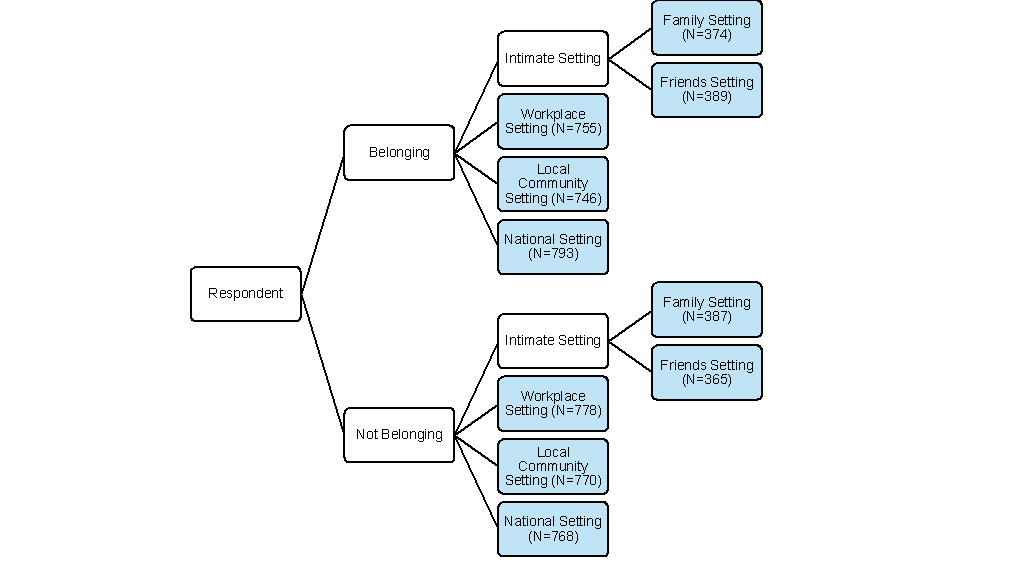
Figure 1. Diagram reflecting the process by which survey respondents were assigned to open-ended question conditions, and the number of respondents that provided answers to each question (N).
Each survey respondent was randomly assigned to one of 10 conditions (highlighted in blue above). These conditions varied on two dimensions: (1) whether the respondent would be asked to describe a situation in which they experienced belonging or not belonging, and (2) the life setting on which the respondent was asked to reflect (e.g., Family, Friends, Workplace, Local Community, or America). In each condition, the respondent was asked two questions, the first asked the respondent to describe the situation and the second asked the respondent to describe how the situation made them feel. Please note that there are fewer responses describing experiences in the family or friends setting as the survey logic first directed one quarter of respondents to the “intimate setting” condition and then assigned them to describe a situation with family or friends.
Survey Questions
Belonging Questions: All of the belonging questions started with this text: “At the very least, belonging means feeling connected to and valued by a group or community...but belonging can mean different things to different people, and be felt in many ways. On the next page, we will ask you to write about a situation or experience when you felt as if you truly belonged.”
Not Belonging Questions: “Not belonging” questions started with this text, “Lacking or losing a sense of belonging can be painful-- it may feel like rejection, loneliness, or not feeling truly seen and understood. Sometimes we feel like this even when others think we belong or try to include us. Lack of belonging can mean different things to different people and be felt in many ways. On the next page we will ask you to write about a situation or experience when you felt as if you did NOT belong.”
| Life Setting | Survey Questions |
|---|---|
| Family | Tell us a situation or experience in your family when you felt as if you truly belonged. In your response, answer each of the below questions. Please do NOT use names or other identifying information for specific individuals.
Tell us a situation or experience in your family when you felt as if you did NOT belong. In your response, answer each of the below questions. Please do NOT use names or other identifying information for specific individuals.
|
| Friendships | Tell us a situation or experience with your friends when you felt as if you truly belonged. In your response, answer each of the below questions. Please do NOT use names or other identifying information for specific individuals.
Tell us a situation or experience with your friends when you felt as if you did NOT belong. In your response, answer each of the below questions. Please do NOT use names or other identifying information for specific individuals.
|
| Workplaces | Tell us a situation or experience at work when you felt as if you truly belonged. In your response, answer each of the below questions. Please do NOT use names or other identifying information for specific individuals.
Tell us a situation or experience at work when you felt as if you did NOT belong. In your response, answer each of the below questions. Please do NOT use names or other identifying information for specific individuals.
|
| Local Community | Tell us a situation or experience in your neighborhood or local community when you felt as if you truly belonged. In your response, answer each of the below questions. Please do NOT use names or other identifying information for specific individuals.
Tell us a situation or experience in your neighborhood or local community when you felt as if you did NOT belong. In your response, answer each of the below questions. Please do NOT use names or other identifying information for specific individuals.
|
| America | Tell us a situation or experience in America, or as an American, when you felt as if you truly belonged. In your response, answer each of the below questions. Please do NOT use names or other identifying information for specific individuals.
Tell us a situation or experience in America, or as an American, when you felt as if you did NOT belong. In your response, answer each of the below questions. Please do NOT use names or other identifying information for specific individuals.
|
Data Analysis
All open-ended responses to the Belonging Barometer survey were analyzed using the qualitative data analysis software, Dedoose. Responses to each question were reviewed, using emergent coding, to identify themes and develop codebooks. To ensure that the codebooks were used consistently in coding responses, a team of three coders performed interrater- reliability assessments for each question until very good or excellent agreement was achieved. Two coders then completed data coding and analysis. Representative quotes from each question type (belonging/not belonging and life setting) were selected, de-identified, and lightly edited for clarity and conciseness in the Stories of Belonging series. For more information, please email belonging@projectoverzero.org.